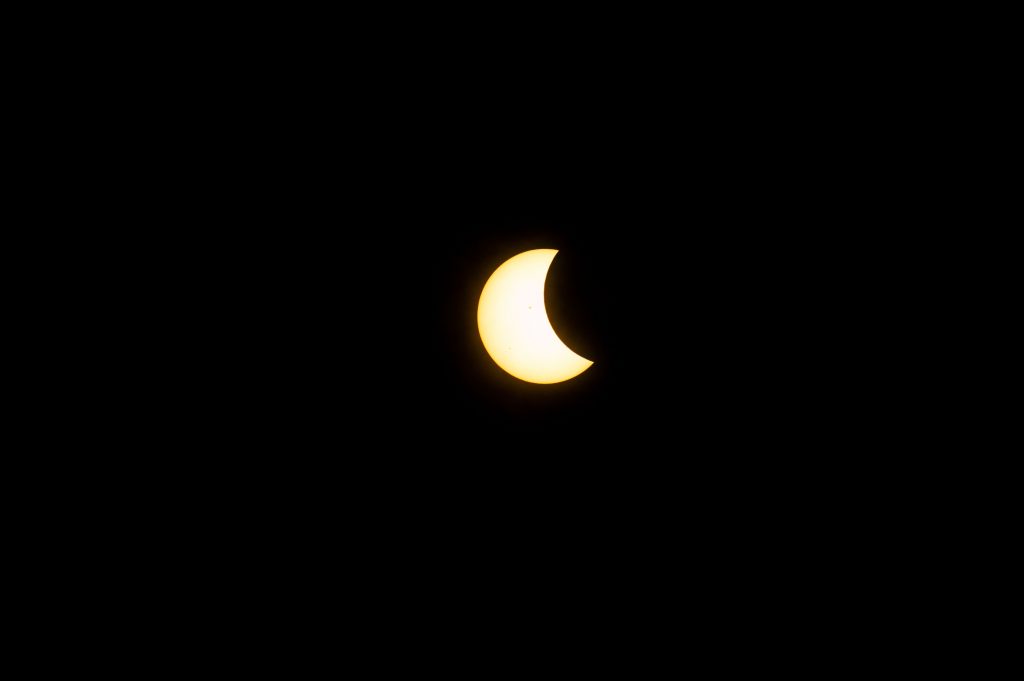
Three safe ways to watch tonight’s eclipse without looking anywhere near the sun. All take five minutes or less and use things most households already have.
Before you start: never look directly at the sun, even when most of it is covered by the moon. Ordinary sunglasses, smoked glass, camera lenses and exposed photographic film do not protect your eyes and can cause permanent damage. If you have eclipse glasses, they should comply with ISO 12312-2 and come from a reputable supplier. If you don’t have certified glasses, the projector methods below are the safe route, because you’re watching a projected image of the sun, not the sun itself.
Method 1: The Pinhole Card Projector
The quickest option, and the one to reach for first if you’re short on time.
You’ll need:
- Two pieces of stiff card or paper plates
- A pin or sharp pencil
Steps:
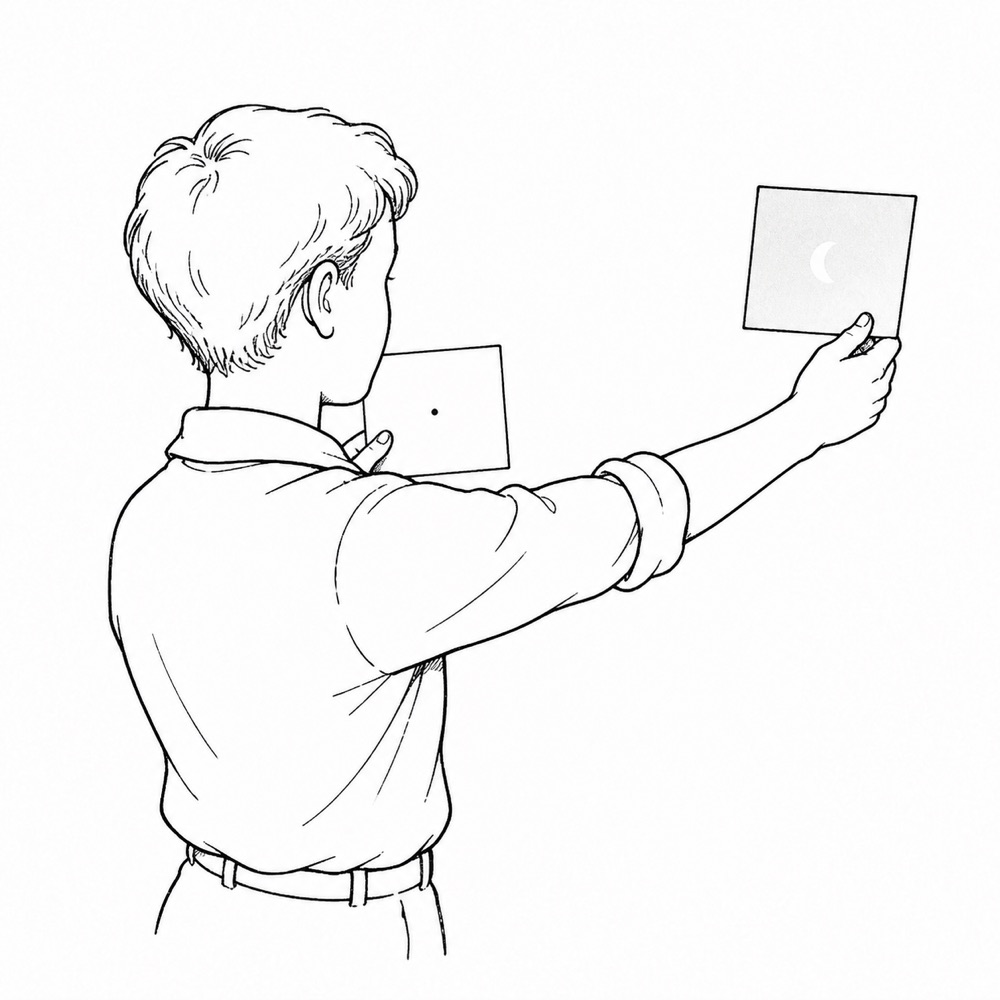
- Make a small, neat hole in the centre of one piece of card using the pin. It should be no bigger than a pinprick; a bigger hole gives a blurrier image.
- Stand with your back to the sun.
- Hold the pinhole card close to you, near or just above one shoulder, so sunlight passes through the hole from behind.
- Hold the second card out in front of you at arm’s length as a screen.
- Adjust the distance between the two cards until you see a small, sharp crescent of light on the card in front of you. That crescent is the sun, mid-eclipse.
Never look through the pinhole at the sun.
Method 2: The Shoebox Projector
A slightly more involved version, good for a session with a group of children, since everyone can decorate their own box first.
You’ll need:
- A long shoebox or cereal box
- Scissors or a craft knife
- Aluminium foil
- A pin
- White paper
- Sticky tape
Steps:
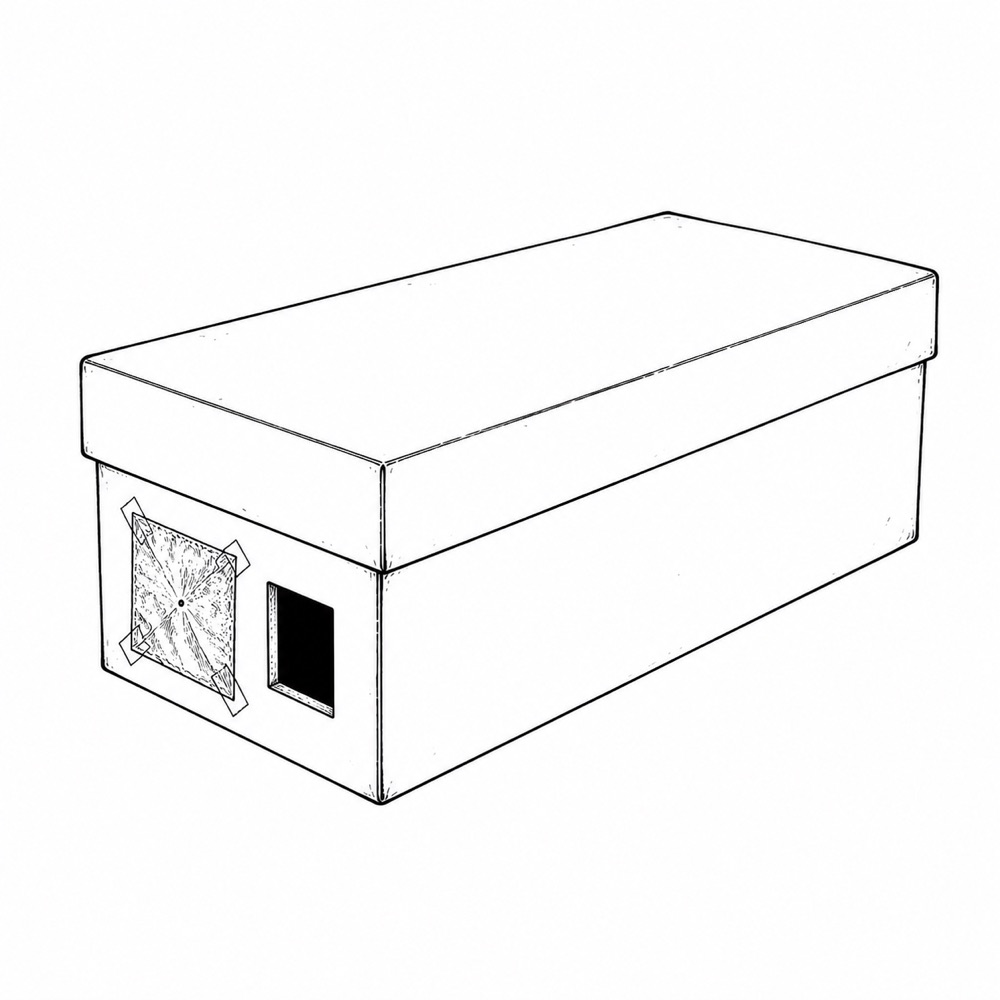
- Open the box and tape a piece of white paper over the inside of one end. This will be your projection screen.
- At the opposite end, ask an adult to cut two holes side by side, at least 10 cm apart: one small square hole for the sunlight and one larger hole to look through.
- Tape a piece of foil over the sunlight hole.
- Make one tiny pinhole in the centre of the foil.
- Close and seal the box tightly so stray light cannot get in.
- Stand with your back to the sun and the foil-covered end facing it. Look through the viewing hole and adjust the angle of the box until you see the eclipsed sun projected onto the white paper inside. Never look through the pinhole.
Method 3: The Colander (fastest of all)
If you have a kitchen colander or anything else full of small round holes, you already have dozens of pinhole projectors at once.
Steps:
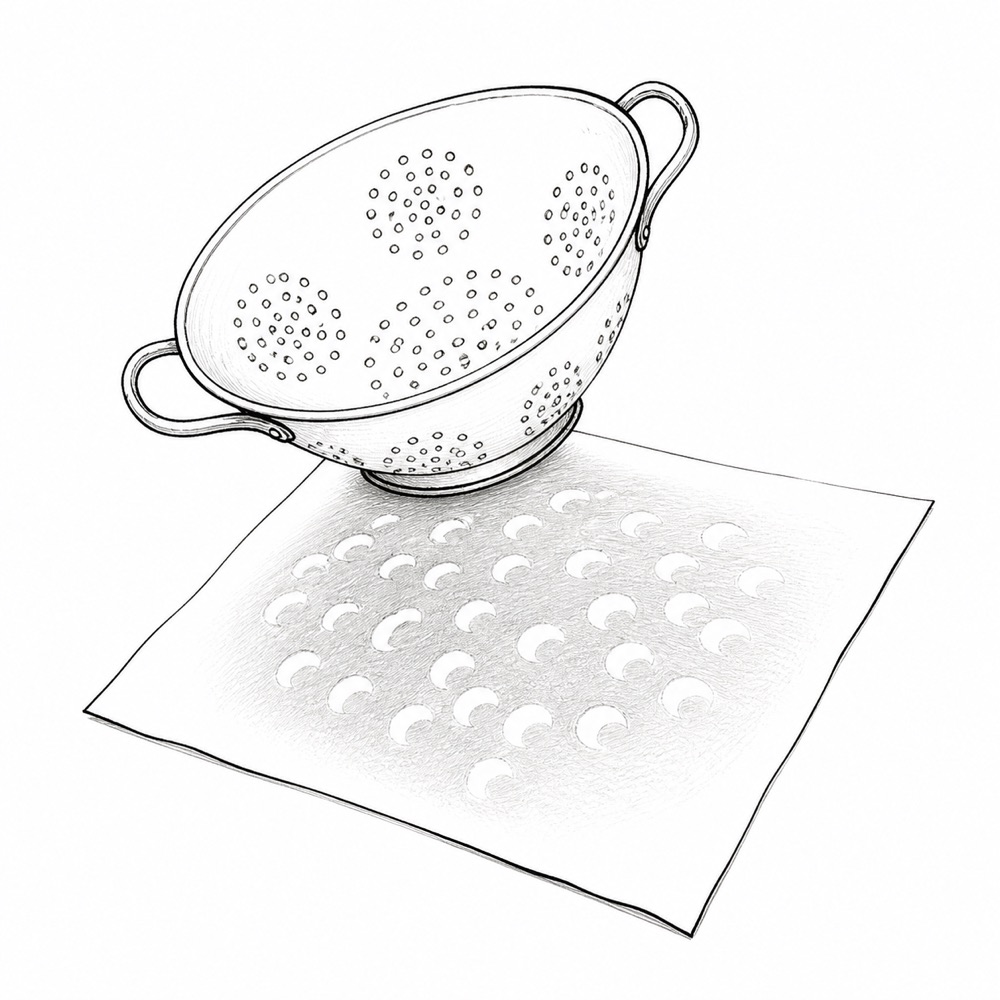
- Hold the colander so the sun shines through it, with your back to the sun.
- Let the light fall onto a piece of card, a light-coloured wall, or the pavement.
- Each hole projects its own small crescent. You’ll see a whole scattering of eclipse shapes rather than just one.
Bonus: Let a Tree Do It For You
This is the one worth pointing children toward, because it needs no equipment and it’s the most Wild Together of the lot. The gaps between leaves in a tree canopy act as hundreds of natural pinholes. Stand under a tree during the eclipse and look at the ground or a pale wall beneath it: instead of the usual dappled circles of light, every gap will be projecting a small crescent. It’s the same physics as the card and the colander, except the tree got there first.
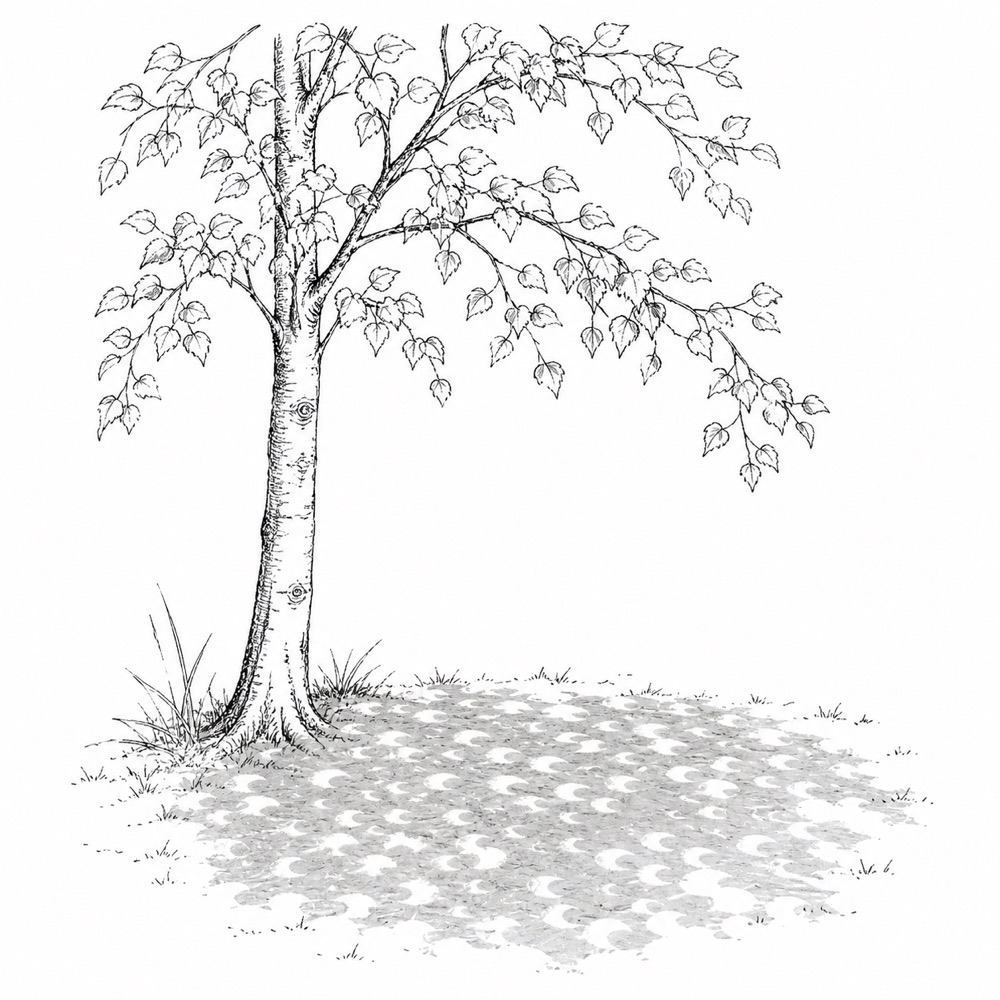
Watching as a group? Space people out a little so no one crowds the projected image, and do a quick reminder at the start: eyes on the shadow, never on the sun.